


*We recommend filling in all fields so that we can get back to you in the best way.
Laparoscopic Inguinal Hernia Surgery
Laparoscopic inguinal hernia surgery is a minimally invasive technique used to repair hernias in the groin area. Small incisions are made to insert a laparoscope and surgical instruments, allowing the surgeon to place a mesh and reinforce the abdominal wall. This approach results in less pain, quicker recovery, and minimal scarring compared to open surgery.
Cost of laparoscopic inguinal hernia surgery is generally higher than traditional methods but offers significant benefits. Many hospitals provide comprehensive packages that cover diagnostic tests, anesthesia, surgery, hospital stay, and follow-up care. Patients benefit from faster return to daily life and lower recurrence rates.
The procedure can be performed using two main approaches: Transabdominal Preperitoneal (TAPP) and Totally Extraperitoneal (TEP). Both methods provide strong and durable repair while minimizing complications. The choice of technique depends on the patient’s hernia type, medical history, and surgeon’s expertise.
Recovery after laparoscopic inguinal hernia surgery is usually rapid, with most patients resuming light activities within a few days. Full recovery and return to strenuous activities typically occur within 2–4 weeks. Post-operative care includes pain management, avoiding heavy lifting, and regular medical follow-up to ensure safe healing.

General Surgery Specialist
Who is Dr. Ahmet Bekin?
Who is Dr. Ahmet Bekin?
Dr. Ahmet Bekin, one of the doctors performing hernia surgeries in Istanbul, is specialized in general surgery. Throughout his medical career, he has gained extensive experience in hernia, reflux, and obesity surgery, as well as advanced laparoscopic and robotic surgical applications. He serves his patients with modern approaches such as minimally invasive surgery, laser surgical treatments, single incision surgery (Single Incision Surgery), endocrine and oncological surgery. He is fluent in Turkish, English, and Arabic.
- 2000 – 2006 Kocaeli University Faculty of Medicine
- 2006 – 2011 Istanbul University Faculty of Medicine (Çapa), Department of General Surgery – Specialization
Certificates






| Definition | A minimally invasive inguinal hernia repair performed through small incisions using a camera (laparoscope) and surgical instruments. Typically reinforced with a synthetic mesh. |
| Indications | Recurrent hernias, bilateral inguinal hernias, patients seeking faster recovery after open repair, those desiring less pain and quicker return to activity. |
| Advantages | Smaller incisions, less pain, rapid recovery, lower infection risk, ability to repair bilateral hernias in the same session. |
| Disadvantages | Requires general anesthesia, may be more costly than open surgery, not suitable for some patients (e.g., extensive intra-abdominal adhesions). |
| Procedure | 1. General anesthesia. 2. Small incisions at the umbilicus or lower abdomen. 3. Insufflation with gas. 4. Placement of laparoscope and instruments. 5. Hernia repair with mesh placement. 6. Removal of instruments and closure. |
| Recovery | Most patients discharged same or next day. Return to normal activities within 1 week. Avoid heavy lifting and strenuous exercise for 4–6 weeks. |
| Possible Complications | Infection, bleeding, recurrence, chronic groin pain, bladder or bowel injury, gas and bloating. |
| Not Suitable For | Patients who cannot tolerate general anesthesia, those with prior major abdominal surgery and severe adhesions, morbidly obese individuals (in some cases). |
İçerik
What Is Inguinal Hernia?
Laparoscopic inguinal hernia repair was developed and popularized in the 1990s as a minimally invasive alternative. Using small incisions and specialized instruments, a synthetic mesh is placed to reinforce the hernia site, supporting natural tissue healing. FDA-approved devices and materials make this approach less traumatic than open surgery. Patients typically recover faster, experience less pain, and have smaller scars, making return to daily life quicker. In experienced hands, it is a safe and effective option.
When Is Laparoscopic Hernia Repair Used?
Laparoscopic repair offers an effective option for certain patients, particularly when:
- Bilateral inguinal hernias
- Recurrent hernias
- Femoral hernias
- Severe symptomatic hernias
- Patients expecting rapid recovery
- Cosmetic concerns and preference for minimally invasive
- Candidates for general anesthesia
Laparoscopic surgery not only provides cosmetic and recovery benefits but can also reduce complication risks. Its different anatomical perspective is especially valuable in femoral and recurrent hernias. Prior major abdominal surgeries require careful evaluation before choosing laparoscopy.
*We recommend filling in all fields so that we can get back to you in the best way.
Who Is Not a Candidate for Laparoscopic Hernia Repair?
Laparoscopic inguinal hernia repair may be contraindicated in some patients. Contraindications are divided into absolute and relative categories.
Absolute contraindications:
- Unsuitable for general anesthesia
- Strangulated hernias
- Intra-abdominal fluid collection
Relative contraindications:
- Prior major abdominal surgery
- Obesity
- Large inguinoscrotal hernias
- Anticoagulant therapy
- Age over 70
- History of radical prostatectomy
Patient health, comorbidities, and hernia characteristics must be carefully assessed to minimize risks and tailor the approach.
How Is Laparoscopic Hernia Repair Performed?
Laparoscopic inguinal hernia repair is performed via TAPP or TEP techniques, requiring meticulous preparation and execution.
Preoperative preparation:
- General anesthesia
- Supine positioning
- Optional Trendelenburg position
Port placement:

- Port used in single-port surgery
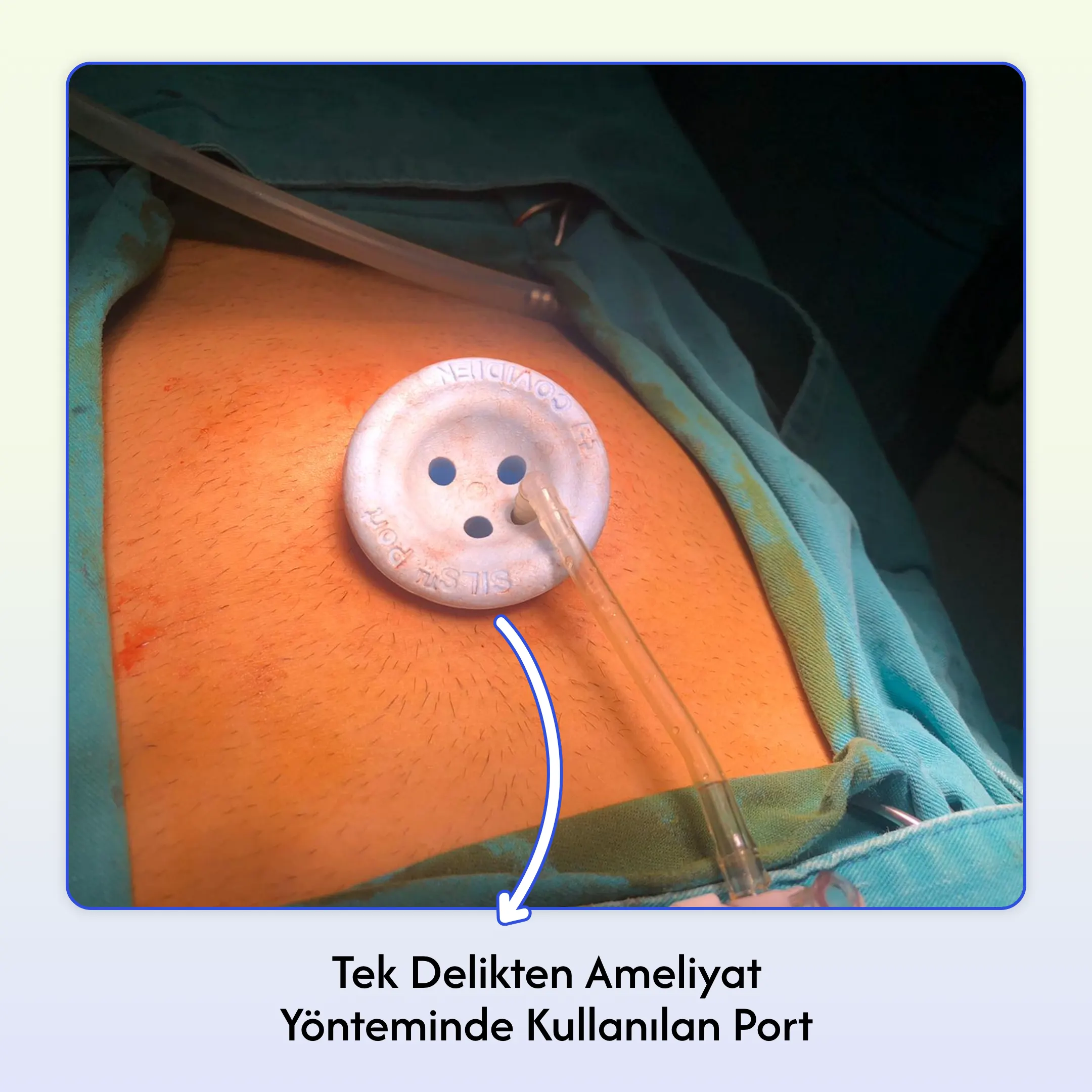
- TAPP: three ports placed transabdominally
- TEP: no peritoneal entry; uses preperitoneal space
Workspace creation:
- TAPP: insufflation with CO₂
- TEP: balloon dissection of preperitoneal space
Hernia sac management:
- Identify sac carefully
- Reduce contents into the abdomen
- Ligate sac in indirect hernias
Mesh placement:

- Use ~10×15 cm mesh
- Cover weak areas of the groin
- Fix with sutures, glue, or tacks
Closure:
- TAPP: close peritoneum
- TEP: no peritoneal closure needed
- Desufflate and remove ports
When performed by experienced surgeons, this method yields lower complication and recurrence rates. Mesh technique varies by surgeon preference. Postoperative care and patient education are critical to recovery.
What Are the Side Effects of Laparoscopic Hernia Repair?
Laparoscopic repair is generally safe and effective, but potential intraoperative and postoperative complications include:
Intraoperative:
- Vascular injury
- Bowel injury
- Bladder injury
Early postoperative:
- Seroma or hematoma
- Urinary retention
- Wound infection
Late postoperative:
- Chronic groin pain
- Hernia recurrence
- Mesh migration or erosion
- Testicular complications
- Nerve injury
Surgeon experience and meticulous technique reduce risks. Patient counseling on possible complications is essential.
How Successful Is Laparoscopic Hernia Repair?
Laparoscopic inguinal hernia repair is recognized as effective and reliable. TAPP and TEP techniques offer low recurrence and high satisfaction. Studies show success rates generally above 95%:
- TAPP and TEP techniques
- Low recurrence rates
- High patient satisfaction
- Rapid recovery
- Minimal complication risk
Surgeon experience and equipment quality are key. Laparoscopy excels in bilateral and recurrent hernias. Reduced pain and shorter hospital stays drive its popularity. Low reoperation rates further validate its reliability. Ongoing training and technological advances will expand its use.
How to Prepare for Laparoscopic Hernia Repair?
Preparation steps for optimal outcomes include:
Health assessments:
- Blood tests
- ECG
- Additional tests as needed
Medications:
- Inform surgeon of all medications
- Stop anticoagulants per guidance
Lifestyle modifications:
- Quit smoking
- Avoid alcohol
Pre-op instructions:
- No food after midnight
- No fluids before surgery
- Shower with antibacterial soap
Surgery day:
- Wear comfortable clothing
- Leave valuables at home
- Arrange transportation support
Psychological preparation and clear communication with the surgical team ensure confidence. Understanding postoperative care smooths recovery.
How Should Postoperative Care Be Managed?
Post-laparoscopic hernia care is vital for recovery and complication prevention. Key aspects:
Pain management:
- Use analgesics for mild pain
- Opioids for severe pain as prescribed
- Laxatives to prevent constipation
Wound care:
- Remove dressings at 24–48 h
- Let steri-strips fall off naturally
- No shower first 36 h
Activity:
- Begin gentle walks early
- No heavy lifting for two weeks
- Resume daily activities cautiously
Nutrition and bowel health:
- Fiber-rich diet and ample fluids
- Stool softeners to avoid straining
Complication monitoring:
- Watch for redness, swelling, or discharge
- Report persistent seroma
- Seek help for urinary difficulty
Follow-up:
- First checkup 7–14 days post-op
- Consult specialist for chronic pain
Lifestyle adjustments—like quitting smoking and gradual exercise—aid recovery. Promptly report any concerns to your doctor.
What Are the Average 2026 Laparoscopic Inguinal Hernia Surgery Prices?
Please contact us for the average Laparoscopic Inguinal Hernia Surgery prices.
Reviews from Those Who Have Had Laparoscopic Inguinal Hernia Surgery
You can check out Dr. Ahmet Bekin’s patient reviews on Google Maps.
Frequently Asked Questions
How long does laparoscopic hernia surgery take?
Typically 30–60 minutes. Hernia size/location and surgeon experience influence duration. Smaller incisions speed recovery.
Which specialty performs laparoscopic hernia repair?
General Surgery handles inguinal hernia repairs. Laparoscopic techniques offer less invasive options and quicker recovery. Specialist evaluation determines the best approach.
Recommended postoperative sleeping position?
Lie supine with head and torso slightly elevated to reduce abdominal pressure. Side-lying is not advised initially. Adjustable beds or extra pillows improve comfort.
Hospital stay duration?
Most patients discharge the same day if mobile, tolerating fluids, and pain is controlled. High-risk cases may require longer observation.
What if surgery is not performed?
Hernia may enlarge, causing pain, incarceration, or strangulation, requiring emergency surgery. Regular monitoring is essential even if asymptomatic.
What to avoid after surgery?
Avoid heavy lifting, strenuous exercise, and prolonged standing for 4–6 weeks. No baths or swimming until fully healed. Follow surgeon’s timeline for resuming activities.
Contact us for detailed information and to schedule an appointment!
Blog Posts
Reviews & Complaints from Patients Who Had Gallbladder Surgery
Dr. Ahmet Bekin » Gall Bladder » Reviews & Complaints from Patients Who Had Gallbladder [...]
22
Jul
Jul

Reviews & Complaints from Patients Who Had Gastric Botox
Dr. Ahmet Bekin » Gastric Botox » Reviews & Complaints from Patients Who Had Gastric [...]
22
Jul
Jul

Reviews & Complaints from Patients Who Had Hiatal Hernia Surgery
Dr. Ahmet Bekin » Umbilical hernia » Reviews & Complaints from Patients Who Had Hiatal [...]
22
Jul
Jul

Reviews & Complaints from Patients Who Had Inguinal Hernia Surgery
Dr. Ahmet Bekin » Inguinal Hernia » Reviews & Complaints from Patients Who Had Inguinal [...]
22
Jul
Jul

Reviews & Complaints from Patients Who Had Umbilical Hernia Surgery
Dr. Ahmet Bekin » Umbilical hernia » Reviews & Complaints from Patients Who Had Umbilical [...]
22
Jul
Jul

What Happens If an Inguinal Hernia Bursts?
Dr. Ahmet Bekin » Inguinal Hernia » What Happens If an Inguinal Hernia Bursts?If an [...]
23
Jun
Jun

Is Non-Surgical Treatment for Inguinal Hernia Possible?
Dr. Ahmet Bekin » Inguinal Hernia » Is Non-Surgical Treatment for Inguinal Hernia Possible?Non-surgical treatment [...]
23
Jun
Jun
How Long Does Inguinal Hernia Surgery and Recovery Take?
Dr. Ahmet Bekin » Inguinal Hernia » How Long Does Inguinal Hernia Surgery and Recovery [...]
23
Jun
Jun