


*We recommend filling in all fields so that we can get back to you in the best way.
Single Hole Hernia Surgery
Single hole hernia surgery, also known as single-incision laparoscopic surgery (SILS), is a minimally invasive technique used to repair abdominal hernias. Unlike traditional laparoscopic methods that require multiple small incisions, SILS is performed through a single cut, usually at the belly button, leaving minimal scarring and offering faster recovery.
Cost of single hole hernia surgery is generally higher than standard laparoscopic methods due to advanced instruments and expertise required. However, patients benefit from improved cosmetic results, reduced post-operative pain, and shorter hospital stays. It is especially preferred by individuals seeking minimally invasive treatment with better aesthetic outcomes.
The procedure involves inserting a laparoscope and specialized surgical tools through the single incision to repair the hernia with sutures or mesh placement. Surgeons experienced in SILS ensure precision and safety while minimizing tissue trauma. This approach is suitable for selected types of hernias, such as umbilical and inguinal hernias.
Recovery after single hole hernia surgery is typically rapid. Most patients return to daily activities within a week, with reduced discomfort compared to open or multi-port surgery. Post-operative care includes avoiding heavy lifting, wearing supportive garments if needed, and attending follow-up appointments to ensure proper healing.

General Surgery Specialist
Who is Dr. Ahmet Bekin?
Who is Dr. Ahmet Bekin?
Dr. Ahmet Bekin, one of the doctors performing hernia surgeries in Istanbul, is specialized in general surgery. Throughout his medical career, he has gained extensive experience in hernia, reflux, and obesity surgery, as well as advanced laparoscopic and robotic surgical applications. He serves his patients with modern approaches such as minimally invasive surgery, laser surgical treatments, single incision surgery (Single Incision Surgery), endocrine and oncological surgery. He is fluent in Turkish, English, and Arabic.
- 2000 – 2006 Kocaeli University Faculty of Medicine
- 2006 – 2011 Istanbul University Faculty of Medicine (Çapa), Department of General Surgery – Specialization
Certificates






İçerik
What Is Single-Port Inguinal Hernia Repair?
Single-port laparoscopic inguinal hernia repair is a minimally invasive procedure performed through one incision at the navel. Compared to traditional multi-port surgeries, it has the potential to provide less pain, faster recovery, and more aesthetic results. First performed in 2009 as an innovative surgical option, the FDA approved the da Vinci Single-Port Surgical System for this technique in 2014, supporting its development and experimental use in hernia operations. Despite its technical challenges, in the hands of experienced surgeons it delivers safe and effective outcomes, representing an innovative approach in hernia treatment.
When Is Single-Port Inguinal Hernia Repair Used?
Single-port laparoscopic inguinal hernia repair (SPL-IHR) is an effective minimally invasive option chosen in certain situations. Its applicability and advantages depend on patient needs and surgeon expertise. Situations in which single-port repair stands out include:
- Unilateral inguinal hernias
- Bilateral inguinal hernias
- Patients with cosmetic concerns
- Patients preferring minimally invasive methods
- When experienced surgeons are available
- Hospitals equipped with specialized devices
One notable advantage is that the umbilical incision becomes nearly invisible once healed. Additionally, shorter hospital stays, faster recovery, and reduced patient trauma compared to conventional multi-port surgery are important benefits.
However, single-port surgery is directly linked to the surgeon’s skill and experience, and the cost of specialized equipment must be considered. Detailed evaluation between patient and surgeon is essential to determine the optimal treatment option.
*We recommend filling in all fields so that we can get back to you in the best way.
Who Is Not a Candidate for Single-Port Inguinal Hernia Repair?
Single-port laparoscopic inguinal hernia repair may not be suitable for certain patient groups. Conditions that complicate or increase the risk of this technique include:
- Inability to tolerate general anesthesia
- History of major abdominal surgeries
- Extensive intra-abdominal adhesions
- Incarcerated or strangulated hernias
- Active infections
- Ascites (abdominal fluid accumulation)
- Prior pelvic radiotherapy
- Complex large or recurrent hernias
These conditions may reduce the success rate or increase complication risks. Therefore, each patient must be evaluated individually. For example, surgery should be postponed in active infection to protect overall health, and open repair may be safer when significant adhesions are present.
How Is Single-Port Inguinal Hernia Repair Performed?
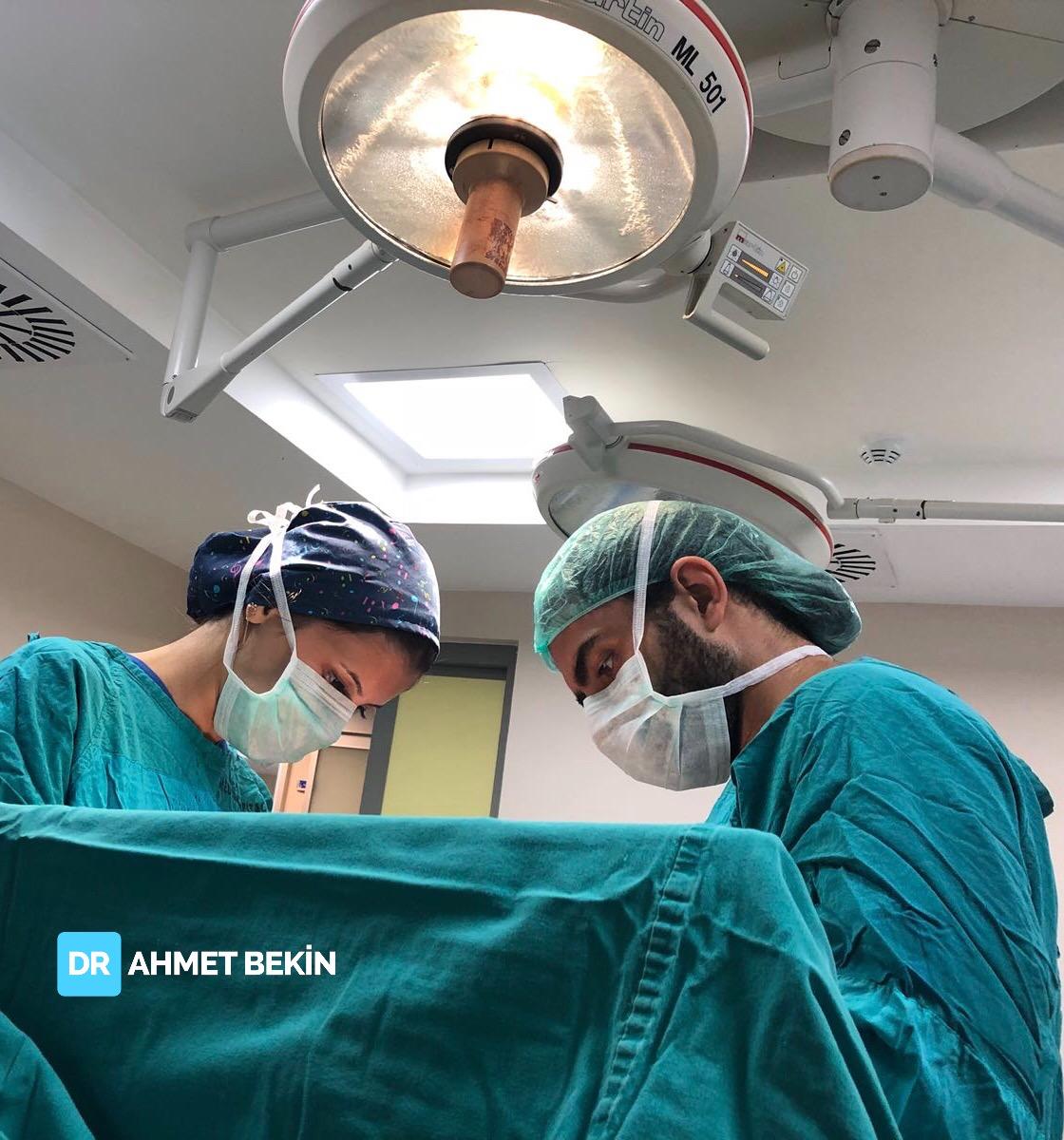
Single-port inguinal hernia repair is performed through one small incision around the navel, leveraging its minimally invasive advantages. The procedure is executed precisely with specialized instruments and techniques:
Patient preparation:
- Performed under general anesthesia
- Patient placed supine
- Surgical area sterilized
Port placement:
- Small incision made around the navel
- Single-port device inserted
Workspace creation:
- Balloon or tissue dissection to create working space
- Extraperitoneal space developed
Hernia sac management:
- Sac carefully identified
- Contents reduced back into the abdomen
Mesh placement and fixation:
- Synthetic mesh positioned precisely
- Fixed with tacks or adhesive
Single-port surgery offers cosmetic and rapid recovery benefits, but its success hinges on surgeon expertise. The requirement for specialized equipment underscores its technical complexity compared to other methods. Thorough patient selection and surgical planning are crucial.
What Are the Side Effects of Single-Port Inguinal Hernia Repair?
Although minimally invasive, single-port repair carries specific risks and potential complications. These include:
- Port-site hernia risk
- Postoperative and chronic pain
- Hernia recurrence
- Seroma and hematoma formation
- Longer operative time
- Patient dissatisfaction with cosmetic outcome
- Intraoperative complications
When performed by experienced surgeons, single-port repair is considered safe. However, individual anatomy and health status significantly impact outcomes. Preoperative evaluation and patient education on risks are essential.
How Successful Is Single-Port Inguinal Hernia Repair?

- Port used in single-port surgery
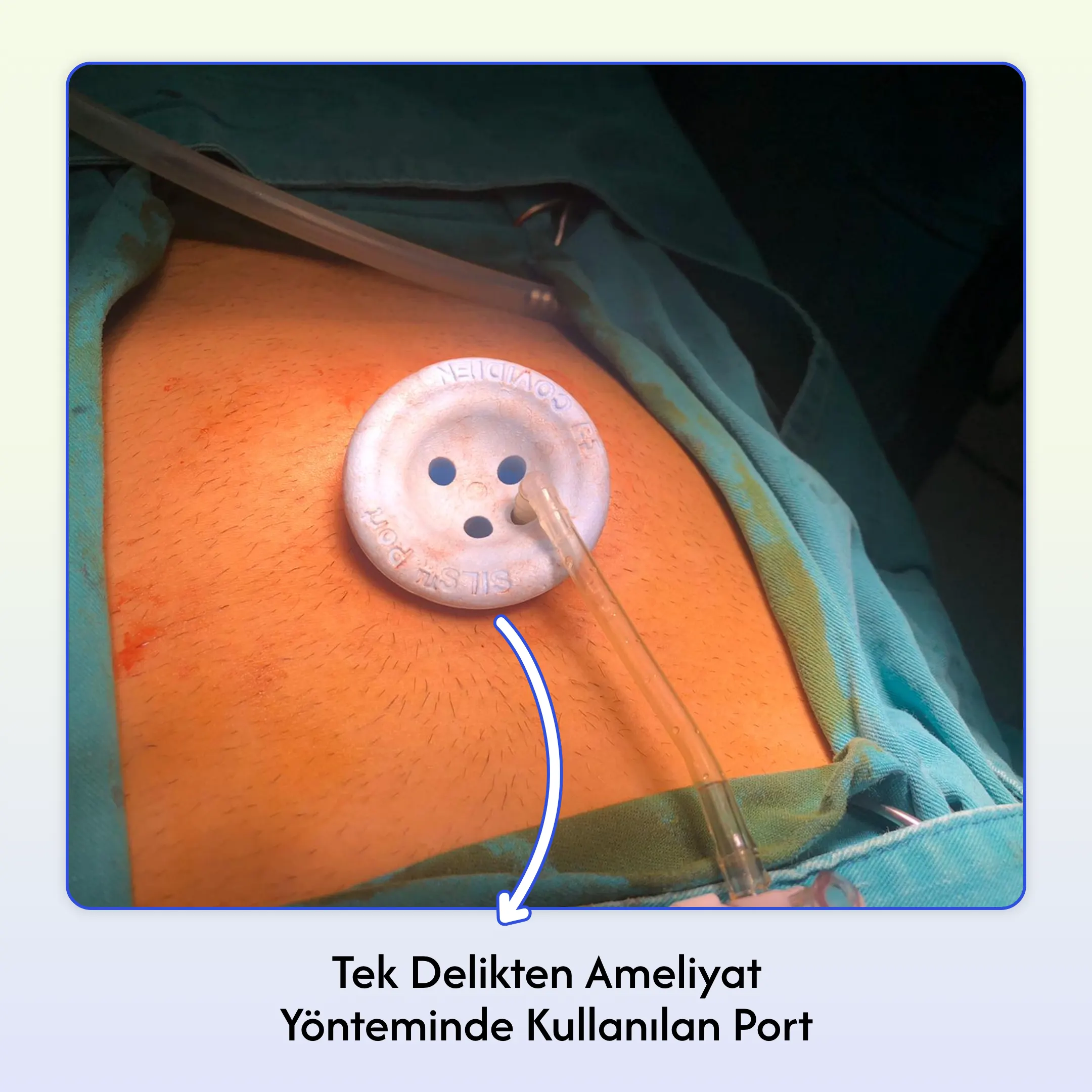
Single-port laparoscopic inguinal hernia repair stands out for its success rates among minimally invasive methods. Scientific studies demonstrate that its efficacy and safety are comparable to conventional multi-port techniques.
Success criteria:
- Low postoperative complication rate
- Minimal hernia recurrence risk
- Low incidence of hematoma or seroma
A 2014 study comparing single-port total extraperitoneal (TEP) repair with three-port TEP found no significant difference in complication rates and reported zero recurrences at 11-month follow-up. A 2024 systematic review and network meta-analysis of 5,038 patients confirmed that single-port repair yields outcomes similar to robotic or multi-port laparoscopic methods.
While offering smaller scars and faster recovery, single-port surgery presents technical challenges in instrument handling. For experienced surgeons, it remains a safe and effective option.
How to Prepare for Single-Port Inguinal Hernia Repair?
Preoperative preparation is crucial for a successful operation and swift recovery. Planning focuses on patient condition and proper organization of surgical equipment. Every step must prioritize patient safety and comfort.
Medical evaluation:
- Patient’s medical history
- Physical examination findings
- Assessment of surgical risk factors
Imaging:
- Ultrasound
- Computed tomography
Patient preparation:
- 12-hour fasting
- Antiseptic skin cleansing
- Bowel preparation (if needed)
Consent and education:
- Advantages and risks of the technique
- Alternative surgical options
- Possible complications
Anesthesia planning:
- General anesthesia evaluation
- Antibiotic prophylaxis
Operating room setup:
- Patient supine position
- Trendelenburg position as preferred
- Umbilical port placement
- Preparation of specialized surgical instruments
Team coordination:
- Clear role assignments
- Step-by-step procedure review
Thorough planning, team coordination, and clear patient communication ensure a smooth operation. Postoperative guidance is also provided to facilitate recovery.
How Should Postoperative Care Be Managed After Single-Port Repair?
After single-port inguinal hernia repair, patients should pay attention to several aspects to ensure successful recovery. Proper pain management, mobility, wound care, nutrition, and follow-up appointments all play key roles. Vigilance against complications is essential.
Pain management:
- Use simple analgesics for mild pain.
- Stronger medications as prescribed for severe pain.
Mobility:
- Begin gentle walking on the day of surgery.
- Avoid strenuous activities.
- Refrain from driving in the early period.
Wound care:
- Keep the incision dry and clean.
- Monitor for redness or swelling.
- Avoid prolonged water exposure.
Activity restrictions:
- No heavy lifting for two weeks.
- Avoid high-intensity sports.
Nutrition:
- Maintain a balanced, healthy diet.
- Include protein and vitamins.
Follow-up:
- Postoperative checkup two weeks after surgery.
- Report fever, swelling, or increased pain immediately.
Recovery times vary by individual, but close monitoring and prompt medical attention for unexpected symptoms are critical. Proper postoperative care helps patients return to daily life more quickly.
What Are the Average 2026 Single Hole Hernia Surgery Prices?
Please contact us for the average Single Hole Hernia Surgery prices.
Reviews from Those Who Have Had Single Hole Hernia Surgery
You can check out Dr. Ahmet Bekin’s patient reviews on Google Maps.
Frequently Asked Questions
How long does single-port inguinal hernia surgery take?
Depending on surgeon experience and hernia complexity, it typically takes 15–30 minutes. Initial cases may take longer.
Which department/specialist performs single-port inguinal hernia repair?
Single-port inguinal hernia repair is a minimally invasive technique aiming to reduce scarring and recovery time. The appropriate method is decided based on patient condition. Treatment is provided by the General Surgery department. Surgeon expertise influences outcomes.
What sleeping position is recommended after single-port inguinal hernia surgery?
Lie flat with head and back slightly elevated to reduce pressure on the surgical area. Special pillows or supports may increase comfort.
How many days hospitalization is required after single-port inguinal hernia repair?
Many patients are discharged the same day or observed for one night. Those at higher risk may require longer stays.
What happens if single-port inguinal hernia surgery is not performed?
Hernia progression may lead to strangulation or obstruction. Although some patients remain asymptomatic for a time, the risk persists.
What should be avoided after single-port inguinal hernia surgery?
Avoid heavy lifting and abdominal straining exercises for at least 4–6 weeks. Stay away from baths or pools until fully healed.
Contact us for detailed information and to schedule an appointment!
Blog Posts
Reviews & Complaints from Patients Who Had Gallbladder Surgery
Dr. Ahmet Bekin » Gall Bladder » Reviews & Complaints from Patients Who Had Gallbladder [...]
22
Jul
Jul

Reviews & Complaints from Patients Who Had Gastric Botox
Dr. Ahmet Bekin » Gastric Botox » Reviews & Complaints from Patients Who Had Gastric [...]
22
Jul
Jul

Reviews & Complaints from Patients Who Had Hiatal Hernia Surgery
Dr. Ahmet Bekin » Umbilical hernia » Reviews & Complaints from Patients Who Had Hiatal [...]
22
Jul
Jul

Reviews & Complaints from Patients Who Had Inguinal Hernia Surgery
Dr. Ahmet Bekin » Inguinal Hernia » Reviews & Complaints from Patients Who Had Inguinal [...]
22
Jul
Jul

Reviews & Complaints from Patients Who Had Umbilical Hernia Surgery
Dr. Ahmet Bekin » Umbilical hernia » Reviews & Complaints from Patients Who Had Umbilical [...]
22
Jul
Jul

What Happens If an Inguinal Hernia Bursts?
Dr. Ahmet Bekin » Inguinal Hernia » What Happens If an Inguinal Hernia Bursts?If an [...]
23
Jun
Jun

Is Non-Surgical Treatment for Inguinal Hernia Possible?
Dr. Ahmet Bekin » Inguinal Hernia » Is Non-Surgical Treatment for Inguinal Hernia Possible?Non-surgical treatment [...]
23
Jun
Jun
How Long Does Inguinal Hernia Surgery and Recovery Take?
Dr. Ahmet Bekin » Inguinal Hernia » How Long Does Inguinal Hernia Surgery and Recovery [...]
23
Jun
Jun