


*We recommend filling in all fields so that we can get back to you in the best way.
Epigastric Hernia Surgery in Turkey
Epigastric hernia surgery in Turkey is a reliable and effective treatment for repairing small defects in the abdominal wall between the belly button and the breastbone. This condition often presents as a small bulge that can cause discomfort, especially during physical activity. In Turkey, advanced surgical techniques and well-equipped medical facilities ensure that the procedure is performed with precision, aiming for minimal scarring and a smooth recovery.
Epigastric hernia surgery cost in Turkey is generally more affordable than in many Western countries while maintaining high medical standards. The price can vary depending on the surgical method used, the patient’s overall health, and the hospital’s facilities. Many health tourism packages include pre-operative assessments, surgery, hospital stay, and post-operative care, making it a cost-effective option without compromising quality.
Epigastric hernia surgery results in Turkey are often highly successful, with most patients experiencing significant relief from discomfort and a return to normal activities within a short recovery period. Modern minimally invasive techniques further help reduce pain and speed up healing, allowing patients to resume their routines with confidence.
Epigastric hernia surgery reviews in Turkey frequently reflect patient satisfaction with the overall care and medical expertise. Many highlight the clear communication before surgery, attentive post-operative monitoring, and the comfortable treatment environment as key factors in their positive experience. The combination of skilled surgical care and patient-focused service helps ensure both safety and comfort throughout the process.

General Surgery Specialist
Who is Dr. Ahmet Bekin?
Who is Dr. Ahmet Bekin?
Dr. Ahmet Bekin, one of the doctors performing hernia surgeries in Istanbul, is specialized in general surgery. Throughout his medical career, he has gained extensive experience in hernia, reflux, and obesity surgery, as well as advanced laparoscopic and robotic surgical applications. He serves his patients with modern approaches such as minimally invasive surgery, laser surgical treatments, single incision surgery (Single Incision Surgery), endocrine and oncological surgery. He is fluent in Turkish, English, and Arabic.
- 2000 – 2006 Kocaeli University Faculty of Medicine
- 2006 – 2011 Istanbul University Faculty of Medicine (Çapa), Department of General Surgery – Specialization
Certificates






| Definition | A small type of hernia that forms in the upper part of the anterior abdominal wall, along the midline between the navel and the rib cage. |
| Causes | Weakness of the abdominal wall, excess weight, heavy lifting, chronic cough, conditions that increase intra-abdominal pressure (constipation, pregnancy, persistent straining). |
| Symptoms | A small swelling above the navel, tenderness to pressure, pain or discomfort; it usually becomes more pronounced when intra-abdominal pressure rises. |
| Risk Factors | Obesity, male sex, intense physical activity, situations that require frequent straining, family history of hernia. |
| Diagnostic Methods | Physical examination, ultrasonography, Computed Tomography. |
| Treatment Methods | Small and asymptomatic hernias may be monitored; surgical repair (primary suture repair or mesh placement) is recommended for pronounced or symptomatic hernias. |
| Complications | Strangulated hernia, intestinal obstruction, chronic pain, recurrence. |
| Prevention Methods | Strengthening the abdominal muscles, avoiding excessive weight gain, limiting heavy lifting, treatment of constipation and chronic cough. |
| Who Is Affected? | It generally occurs in adults and is more common in men than in women. |
İçerik
What Is an Epigastric Hernia?
An epigastric hernia occurs when fat or tissue pushes through a weak spot in the abdominal wall between the breastbone and the belly button. It often appears as a small lump and may be painless or cause discomfort, especially when straining. These hernias are more common in adults and can sometimes increase in size. Surgical repair is usually recommended to prevent complications such as strangulation or bowel obstruction.
What Are the Causes of Epigastric Hernia?
Epigastric hernia can develop as the result of various factors that create weakness in the abdominal wall. These factors are generally related to congenital anatomical characteristics and lifestyle.
The linea alba is a strong structure formed by the fusion of the aponeuroses of the abdominal muscles. Congenital weaknesses can reduce its resistance. In the fetal period, incomplete fusion of the linea alba may lead to small defects, allowing preperitoneal fat to protrude. Although such congenital weaknesses are usually asymptomatic, they become apparent when intra-abdominal pressure increases.
Conditions that raise intra-abdominal pressure are among the most common causes of epigastric hernia. Obesity, pregnancy, chronic cough and heavy lifting impose excessive strain on the abdominal wall. During obesity and pregnancy, intra-abdominal pressure rises continuously, whereas activities such as heavy lifting or straining cause sudden, intense increases.
With aging, the loss of elasticity in connective tissues can create weaknesses in the linea alba and increase the risk of epigastric hernia in older individuals. Muscle loss and reduced physical activity further decrease the strength of the abdominal wall.
Trauma or surgical procedures involving the abdominal region can create permanent weaknesses in the abdominal wall. If complications occur during postoperative healing, the risk of hernia formation rises.
Connective tissue disorders can weaken tissues and increase hernia risk; Ehlers-Danlos syndrome is one such genetic disease. In addition, smoking, poor nutrition and a sedentary lifestyle weaken the abdominal wall and contribute to hernia formation.
How Common Is Epigastric Hernia?
Current data on the prevalence of epigastric hernia in the general population are limited. However, a large national study in Denmark provides valuable information. Between 2006 and 2010, out of 5,639,885 individuals, 2,412 underwent surgical treatment for epigastric hernia, corresponding to a prevalence of about 0.043 percent. The study showed that prevalence peaked between forty-one and fifty years of age in women (0.09 percent) and between fifty-one and seventy years in men (0.06 percent).
Although epigastric hernia is rarer in children, it still requires consideration. A review in Missouri reported that only four percent of childhood hernias were epigastric. Most pediatric cases involve only preperitoneal fat, and over one-third are symptomatic.
Demographic characteristics demonstrate a clear influence of age and sex. Epigastric hernia is diagnosed more frequently in adults, particularly in middle-aged women and older men. In children it is usually diagnosed around the age of four and shows a slight predominance in girls.
*We recommend filling in all fields so that we can get back to you in the best way.
How Does an Epigastric Hernia Develop?
The formation of an epigastric hernia usually begins with structural weaknesses in the abdominal wall combined with increased intra-abdominal pressure. The linea alba is a fibrous structure that runs along the midline of the abdominal wall and contains natural openings through which vessels pass. When intra-abdominal pressure rises, these openings can predispose to hernia formation.
An epigastric hernia generally starts with preperitoneal fat protruding through a small defect in the linea alba. This early stage is usually unnoticed because the hernia is initially painless and asymptomatic. However, conditions that raise intra-abdominal pressure—such as heavy lifting, chronic cough, pregnancy or constipation—can enlarge the defect. As the defect widens, the omentum, small intestine or other abdominal contents may enter the space and herniate.
Symptoms become more pronounced as the hernia progresses. Patients typically describe pain and tenderness in the upper abdominal region and a swelling that becomes more obvious during physical activities. Depending on the size of the hernia and the type of contents, the sense of discomfort can increase, affecting quality of life.
If untreated, epigastric hernia can lead to complications. Incarceration or strangulation of herniated contents can cause severe problems. These complications may present with intense pain, redness and tenderness in the abdominal region and require emergency surgical intervention.
The development of an epigastric hernia varies from the initial stage to complications, depending on many factors, but early diagnosis and appropriate treatment are critical to prevent serious outcomes.
What Are the Symptoms of Epigastric Hernia?
An epigastric hernia may not show obvious symptoms, but in some cases it manifests with discomfort. Asymptomatic cases are often detected incidentally during examinations or imaging performed for other reasons. Cadaver studies indicate a frequency between 0.5 and 10 percent, suggesting many cases remain unnoticed throughout life.
Localized pain and discomfort are the most common findings in symptomatic cases. Pain is usually felt in the upper midline of the abdomen and can intensify with actions that increase intra-abdominal pressure, such as heavy lifting, coughing or straining. Described as sharp or burning, the pain can be more severe than expected because fatty tissue becomes trapped in a small fascial defect.
A visible or palpable swelling is another noticeable sign. The swelling is more pronounced when standing or straining the abdominal muscles and disappears when lying down or relaxing. Its size depends on the width of the defect and the tissues involved.
Tenderness and redness may occur due to pressure on or inflammation of herniated tissues and can indicate a more serious condition.
Although less common, severe symptoms related to complications pose a serious risk. Incarcerated hernia can create a painful situation that damages tissue, while strangulated hernia, in which blood circulation is compromised, requires emergency surgery. It presents with sudden and intense pain, nausea, vomiting and fever.
In pediatric cases, epigastric hernia usually presents as a swelling in the abdomen. For smaller defects, ultrasonography is an effective diagnostic method.
How Is Epigastric Hernia Diagnosed?
Diagnosis of epigastric hernia involves a careful clinical assessment and advanced imaging when necessary. First, a detailed medical history is taken and symptoms are reviewed. Patients often complain of a swelling felt or seen in the upper mid-abdomen. It becomes more apparent with movements that increase intra-abdominal pressure, such as coughing or straining. Pain and tenderness may also be observed.
Physical examination is fundamental. The patient is examined both standing and lying supine. The epigastric region is palpated carefully, and the patient is asked to perform the Valsalva maneuver or to cough, making the hernia more prominent. During examination, the distinction between hernias that can be reduced gently and those that are incarcerated is assessed.
When physical examination is inadequate or complications are suspected, imaging methods are used.
- Ultrasonography is frequently used to diagnose epigastric hernia. It employs high-frequency sound waves to provide information about the location, size and content of the hernia and is effective for small hernias.
- Computed Tomography is used for more complex hernias or those involving internal organs. It provides cross-sectional images that detail anatomical relationships and possible complications such as strangulation or intestinal obstruction.
- Magnetic Resonance Imaging is superior for detailed examination of soft tissues and offers critical information when surgical planning is required.
Contact us for detailed information and to schedule an appointment!
How Is Epigastric Hernia Treated?
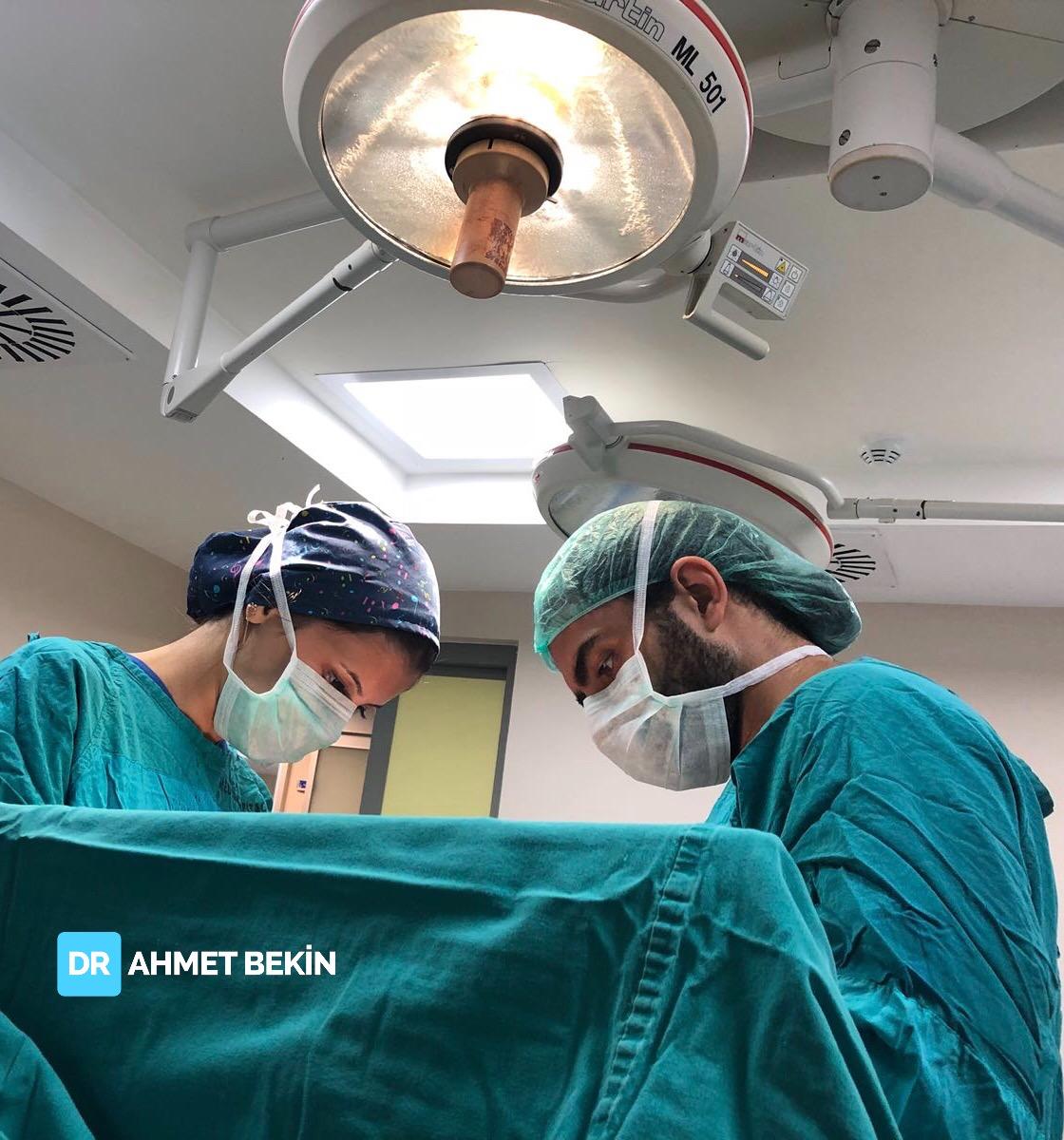
The main approach to treating epigastric hernia is surgical repair. Surgical methods are chosen according to the size of the hernia, the patient’s general health and the surgeon’s experience. Open hernia repair is a classic method that allows direct access to the hernia. The defect in the abdominal wall is closed with sutures, and a synthetic patch (mesh) is usually placed to reduce recurrence risk. Because a larger incision is required, recovery can be somewhat longer.
Laparoscopic repair is a modern, minimally invasive method. A camera and surgical instruments are inserted through small incisions into the abdomen. Advantages include less postoperative pain, rapid recovery and short hospital stay. However, it requires general anesthesia and a higher level of surgical expertise.
Robotic-assisted repair, an advanced option, uses robotic systems to enhance the precision of the laparoscopic technique and may be preferred in complex cases. Nevertheless, its cost is high and it is not available in every center.
Among the mesh-placement techniques, the sublay (retromuscular) repair is one of the most frequently chosen, owing to its low recurrence rates and minimal mesh-related complications. The position of the mesh is determined according to the hernia’s anatomy and the surgeon’s preference.
What Are the Complications of Epigastric Hernia?
Untreated epigastric hernia can lead to serious, potentially life-threatening complications, including incarceration, strangulation, chronic pain, gastrointestinal symptoms and neuropsychiatric effects. Each can affect health to varying degrees and greatly reduce quality of life.
Incarceration is the inability to return hernia contents to the abdominal cavity. It often causes intestinal obstruction and presents with nausea, vomiting and abdominal pain. Strangulation, a more severe complication, occurs when the blood supply to hernia contents is cut off, leading to tissue necrosis and systemic problems such as sepsis that require emergency surgery.
Without acute complications, untreated hernias can still cause chronic pain and discomfort, especially during activities that raise intra-abdominal pressure—lifting, coughing or bending. Some patients experience dyspepsia, constipation or vomiting, which can negatively affect daily life and restrict social activities.
Rarely, epigastric hernia can lead to neuropsychiatric symptoms. Continuous discomfort may result in neurasthenia, depression and nervous symptoms.
When Can Epigastric Hernia Be Treated?
Timing in the treatment of epigastric hernia depends on the presence of symptoms, the size of the hernia and the risk of complications. Symptomatic hernias constitute the clearest indication for surgical repair. These patients may experience a significant decline in quality of life because of localized pain or tenderness that intensifies with physical activity. Symptomatic hernias are also more prone to incarceration and strangulation, which carry life-threatening risks. Elective surgery is therefore critical to prevent serious consequences.
Treatment decisions are more complex for asymptomatic hernias. Watchful waiting can be applied because the risk of acute complications is low, but patients should be informed about the potential for progression or complications. Surgery may be considered if symptoms appear or the hernia enlarges, and regular follow-up is essential.
The size of the hernia and the characteristics of the defect also guide planning. Small defects can usually be treated with primary suture repair, whereas the use of mesh is recommended for defects larger than one centimeter to reduce recurrence risk. Guidelines from European and American hernia societies show that mesh increases the durability of repairs for larger defects.
Patient-specific factors must also be considered. Comorbidities such as obesity, diabetes or cardiopulmonary disease affect both hernia complications and surgical outcomes. Optimizing overall health before surgery is important. Activities that increase intra-abdominal pressure can worsen symptoms and hasten the need for surgery.
When Can Epigastric Hernia Not Be Treated?
Treatment planning considers factors that determine general health and surgical risks, but certain conditions may necessitate postponing or contraindicating surgery. These situations are classified as absolute and relative contraindications.
- Absolute Contraindications:
Manual reduction is strictly discouraged for a strangulated or incarcerated hernia because returning tissue with compromised blood supply to the abdomen can introduce necrotic tissue and cause severe infection or sepsis. Such cases require immediate surgical intervention. In addition, surgery should not be performed until an active infection in the abdominal region has been fully treated because infection can impair wound healing and increase complication risk.
- Relative Contraindications:
Surgery must be evaluated carefully in patients with systemic diseases—advanced cirrhosis, metastatic cancer or severe cardiopulmonary disorders. If life expectancy is short, surgical benefits may be less than the risks. In addition, obesity (Body Mass Index greater than thirty) increases wound complications and recurrence risk; surgery may be deferred until weight loss is achieved. Uncontrolled diabetes impairs wound healing; blood glucose levels should therefore be balanced before surgery. Similarly, smoking adversely affects healing and the postoperative course, so cessation is recommended preoperatively. Abdominal fluid accumulation (ascites) raises intra-abdominal pressure and can lead to recurrence, so it must be controlled. Repair is generally postponed until after delivery in pregnancy, but intervention may be necessary in emergencies.
What Is the Recovery Process After Epigastric Hernia Repair?
| Recovery Period | In mild hernias recovery usually takes one to two weeks; complete recovery for larger hernias can take four to six weeks. |
| Pain and Discomfort | Pain and tenderness at the operation site can last for several days and are controlled with painkillers. |
| Physical Activity | Rest is recommended during the first week. Heavy lifting should be avoided for four to six weeks. Light activities such as walking are encouraged. |
| Suture Care | Protect the sutured area from moisture and dirt. Self-dissolving sutures are generally used. |
| Return to Work | Return to desk work is possible within five to seven days, but longer for physically demanding occupations (four to six weeks). |
| Bathing | According to medical advice, showering is usually allowed twenty-four to forty-eight hours later if the dressing is waterproof. |
| Nutrition | A diet rich in fiber and adequate fluid intake are recommended to prevent constipation. Avoid overeating. |
| Swelling (Operation Site) | Edema or firmness at the operation site can occur and is usually temporary. Seek medical advice if pain or redness increases. |
| Sleeping Position | Lying on the back is the most suitable position. Avoid positions that put pressure on the abdomen. |
| Complications | Infection, hematoma, recurrence of hernia, nerve injury can occur. |
| Follow-Up Examination | A check-up is usually recommended within one week and should be performed on the date specified by the doctor. |
| Sexual Activity | Activities that strain the abdominal muscles should be avoided for two to three weeks. |
The recovery process after epigastric-hernia surgery varies according to the type of surgery, the patient’s general health and the treatment protocols applied. Key considerations include pain management, wound care, physical activity, dietary regulation and regular follow-up examinations.
Discomfort in the surgical area is common in the first days after surgery. Effective pain control is critical for rapid recovery. Pain is usually managed with non-steroidal anti-inflammatory drugs; opioid medications should be used only for severe pain and for short periods. Enhanced Recovery After Surgery protocols recommend multimodal analgesia to reduce opioid requirements and side effects.
Proper wound care reduces infection risk and supports healing. It is important to keep the operation site clean and dry for the first twenty-four to forty-eight hours. Thereafter the area can be cleaned gently. Signs of infection—redness, swelling, warmth, discharge—should be monitored closely. When mesh is used, wound care must be even more meticulous.
Early mobilization improves circulation and reduces complication risk. Patients are generally advised to avoid heavy lifting and strenuous physical activities for four to six weeks. Normal activities should be reintroduced gradually under medical guidance.
A light diet should begin postoperatively and advance as tolerated. Adequate fluid intake and foods rich in fiber prevent constipation. Stool softeners may be used if necessary.
Follow-Up Examinations and Monitoring Complications: Scheduled follow-ups are essential to monitor healing and detect complications early. Possible complications such as recurrence, chronic pain and infection are assessed at these visits. Adhering to medical advice is the cornerstone of successful recovery.
What Are the Average 2026 Epigastric Hernia Surgery in Turkey Prices?
Please contact us for the average Epigastric Hernia Surgery in Turkey prices.
Reviews from Those Who Have Had Epigastric Hernia Surgery in Turkey
You can check out Dr. Ahmet Bekin’s patient reviews on Google Maps.
Frequently Asked Questions
How long does epigastric-hernia surgery take?
Epigastric-hernia surgery generally lasts between twenty and fifty minutes. In small hernias the procedure can take less than thirty minutes, whereas larger or more complex cases take longer. The operation is often performed on an outpatient basis and the patient can be discharged the same day. The surgical method is chosen according to the patient’s general health.
Which department or doctor should I see for an epigastric hernia?
An epigastric hernia, which appears between the navel and the rib cage, becomes evident when tissues protrude through weak points in the abdominal wall. It may present with pain, swelling and sometimes digestive complaints. When diagnosed early, treatment proceeds more simply and without complications. If epigastric hernia is suspected, it is essential to consult the Department of General Surgery. After the necessary examination and investigations, surgical intervention can be planned.
What is the best lying position after epigastric-hernia surgery?
After surgery, lying on your back with your waist and head slightly elevated is ideal. This position reduces pressure on the abdomen and helps the wound heal. If lying flat is uncomfortable, use several pillows or an adjustable bed to increase comfort. Avoid movements and positions that strain the abdomen.
How many days of hospitalization are needed after epigastric-hernia surgery?
For simple and small hernia repairs you can usually be discharged the same day. In some open surgeries or larger hernia repairs, staying in the hospital for one to two days may be necessary. If additional risk factors or a risk of complications exists, the stay may be longer. Follow your doctor’s advice and do not neglect control examinations.
What happens if epigastric-hernia surgery is not performed?
The hernia may enlarge over time and intra-abdominal organs may enter the hernia sac, increasing the risk of incarceration or strangulation. This can lead to intestinal obstruction and tissue death, which require emergency intervention. If surgery is delayed, the operation may become more extensive and recovery may take longer.
What should be avoided after epigastric-hernia surgery?
During the first four to six weeks after the operation you should avoid heavy lifting and exercises that strain the abdominal muscles. Until the wound is completely healed, stay away from environments such as bathtubs, swimming pools or Turkish baths; choose short showers instead. Take care not to become constipated and avoid straining, which increases intra-abdominal pressure.
Contact us for detailed information and to schedule an appointment!
Blog Posts
Reviews & Complaints from Patients Who Had Gallbladder Surgery
Dr. Ahmet Bekin » Gall Bladder » Reviews & Complaints from Patients Who Had Gallbladder [...]
22
Jul
Jul

Reviews & Complaints from Patients Who Had Gastric Botox
Dr. Ahmet Bekin » Gastric Botox » Reviews & Complaints from Patients Who Had Gastric [...]
22
Jul
Jul

Reviews & Complaints from Patients Who Had Hiatal Hernia Surgery
Dr. Ahmet Bekin » Umbilical hernia » Reviews & Complaints from Patients Who Had Hiatal [...]
22
Jul
Jul

Reviews & Complaints from Patients Who Had Inguinal Hernia Surgery
Dr. Ahmet Bekin » Inguinal Hernia » Reviews & Complaints from Patients Who Had Inguinal [...]
22
Jul
Jul

Reviews & Complaints from Patients Who Had Umbilical Hernia Surgery
Dr. Ahmet Bekin » Umbilical hernia » Reviews & Complaints from Patients Who Had Umbilical [...]
22
Jul
Jul

What Happens If an Inguinal Hernia Bursts?
Dr. Ahmet Bekin » Inguinal Hernia » What Happens If an Inguinal Hernia Bursts?If an [...]
23
Jun
Jun

Is Non-Surgical Treatment for Inguinal Hernia Possible?
Dr. Ahmet Bekin » Inguinal Hernia » Is Non-Surgical Treatment for Inguinal Hernia Possible?Non-surgical treatment [...]
23
Jun
Jun
How Long Does Inguinal Hernia Surgery and Recovery Take?
Dr. Ahmet Bekin » Inguinal Hernia » How Long Does Inguinal Hernia Surgery and Recovery [...]
23
Jun
Jun