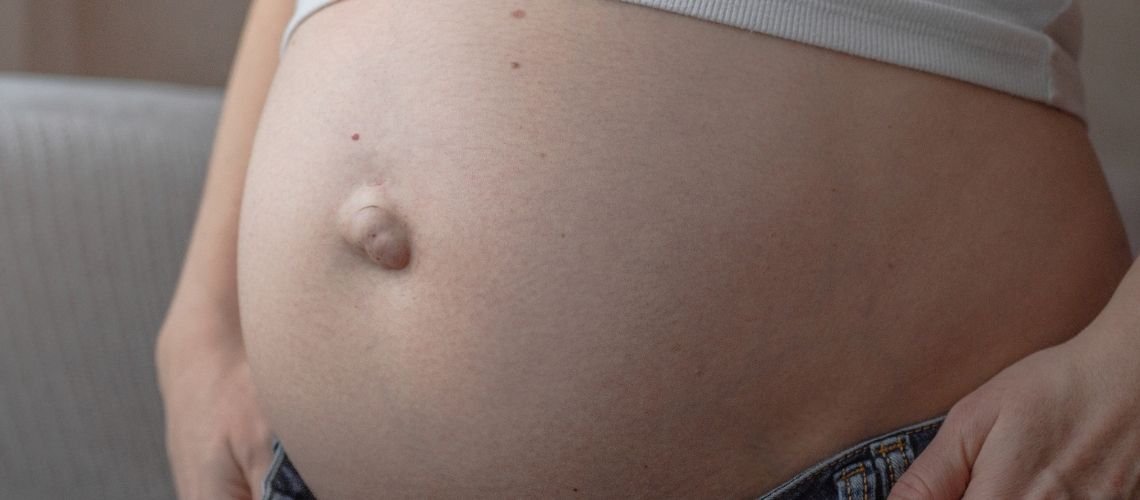


An umbilical hernia in adults does not heal on its own and often requires surgery. Unlike in infants, where spontaneous closure may occur, adults face higher risks of enlargement and complications over time. Medical assessment determines the need for operative treatment.
Complications of untreated umbilical hernias include pain, cosmetic discomfort, and increased risk of incarceration. This occurs when abdominal tissue becomes trapped, potentially leading to reduced blood circulation. Such conditions may progress to dangerous strangulation if left unattended.
Strangulated umbilical hernias are medical emergencies. Symptoms such as severe abdominal pain, nausea, vomiting, and discoloration around the navel require urgent surgical intervention. Delayed treatment can result in bowel obstruction, necrosis, and life-threatening infections.
Elective surgical repair offers safe, effective outcomes. Mesh reinforcement reduces recurrence rates and ensures long-term stability. Maintaining healthy body weight, avoiding heavy lifting, and following postoperative care instructions further protect against complications.
İçerik
Do Umbilical Hernias in Babies Heal on Their Own?
Umbilical hernias in babies are defined as a portion of the abdominal wall that is not yet fully strengthened occasionally bulging outward. This swelling becomes more prominent, especially when the baby cries, strains, or coughs. Since babies’ abdominal muscles are much more delicate compared to adults, such bulges around the umbilical ring are quite common.
So, should you be worried in this case? Usually, no. Most umbilical hernias in babies tend to heal on their own by the age of 1 to 2. You can think of it as a soft door gap that gradually closes over time. In most cases, as the abdominal muscles strengthen, the hernia regresses and the navel regains its original appearance. This likelihood is even higher if the hernia opening is small and the baby was born full-term. Of course, it is important to take your baby to regular doctor check-ups and consult a specialist as soon as possible if there are obvious symptoms such as severe pain, color change, or breastfeeding difficulties indicating hernia incarceration.
Can Umbilical Hernias in Adults Heal Without Surgery?
While spontaneous healing is frequently observed in infants, unfortunately, this is rarely possible in adults. For an adult, expecting an abdominal wall opening to close on its own is almost as unlikely as expecting a seed to return underground after sprouting. Over time, the weakened abdominal wall tissue is subjected to even more stress due to factors such as heavy lifting, obesity, or chronic cough, and the hernia opening can become larger.
Of course, temporary relief can be achieved by wearing a supportive corset or special belts. However, it should be noted that these do not permanently close the fundamental problem—the opening in the abdominal wall. Therefore, umbilical hernias in adults are usually repaired surgically. It’s like trying to fix a punctured tire just by inflating it; you might reduce the leakage by applying pressure from outside, but true repair requires sealing the hole itself.
What Are the Chances of Umbilical Hernias Resolving on Their Own?
Umbilical hernias have a high potential to close spontaneously in babies. Some studies report closure rates of roughly 60–65% by the age of 1 and over 80% by the age of 3. The rationale is this: as babies grow and become more active, their abdominal muscles strengthen like a net and gradually compress any existing openings.
In contrast, this rate is lower in premature babies because they are born before their muscles and connective tissues are fully developed. You can liken this to a house under construction needing more time and adjustment to properly install door frames.
In adults, the situation is almost the exact opposite. Given the living conditions and factors that increase intra-abdominal pressure, the chance of self-healing for an adult with an umbilical hernia is extremely low. For this reason, physicians generally plan surgical repair based on the size of the hernia and the patient’s overall health status.
Is an Untreated Umbilical Hernia Dangerous?
The answer to the question, “What happens if an umbilical hernia is left untreated?” depends on the size and location of the hernia, as well as the individual’s overall health and age. Small, painless, and non-incarcerated hernias in babies are generally not dangerous and, when closely monitored, mostly regress on their own. However, the situation is more serious in adults. Hernia tissue—especially if it involves intestines—can become trapped (incarceration) or strangulated.
Imagine heavy traffic moving through a narrow tunnel: as the tunnel narrows, vehicles will get stuck, and eventually, one will be completely blocked, causing a pile-up. In our bodies, if a similar blockage occurs, blood flow can be cut off, the intestinal tissue can lose its vitality, and this may require emergency surgery. To avoid such serious complications, it is important to consider the risks that may arise in the future, especially when a hernia is detected in adults.
What Factors Affect the Likelihood of Spontaneous Healing of Umbilical Hernias?
The most fundamental factor influencing the spontaneous healing of hernias in babies or children is the size of the hernia. If the opening in the navel is small, the chances of it closing as the muscles grow increase. The baby’s general health and whether they were born prematurely are also important. For example, since premature babies have weaker muscle structure, their closure rates are lower than those of full-term babies.
In adults, the chance of natural healing is very low. Here, factors that increase intra-abdominal pressure, such as obesity, make healing almost impossible. Likewise, chronic cough, constipation, and frequent heavy lifting contribute to the widening of the hernia. Since the adult body does not have the rapid healing capacity of infants, it is generally not expected for an established hernia to close on its own.
What Are the Complication Risks of Untreated Umbilical Hernias?
Untreated or neglected umbilical hernias can grow over time, cause recurrent abdominal pain, and lead to aesthetic concerns. Most importantly, serious complications such as incarceration (entrapment of the tissue inside) and strangulation can occur. In these situations, blood circulation to the trapped intestinal tissue is cut off—just like a fish out of water, it quickly becomes damaged and may require emergency surgery.
Sometimes, the hernia sac contains not just fat tissue but also intestines, and if a segment of intestine becomes trapped, it can result in bowel obstruction or even bowel perforation. Such complications are more likely in adults than in babies. For this reason, especially when a hernia is detected in adults, leaving the process “as is” may pave the way for bigger problems down the line.
How Do Obesity and Other Risk Factors Affect Umbilical Hernia Outcomes?
Obesity puts extra stress on every joint and tissue in the body. In terms of umbilical hernia, intra-abdominal pressure is higher, and there is more pressure on the weak spot. It’s like increasing the number of fingers pressing on a water balloon that’s already likely to burst. This not only makes hernia formation easier but can also increase the growth rate of an existing hernia.
Similarly, liver disease (associated with ascites), chronic cough, heavy lifting, constipation, and advanced age are considered risk factors. For example, every coughing fit in someone with chronic cough temporarily but repeatedly increases the pressure on the hernia. As we age, tissue elasticity and healing capacity decrease, which leads to both the progression of the hernia and longer recovery times after surgery.
Op. Dr. Ahmet Bekin was born in Istanbul in 1983. He graduated from the Faculty of Medicine at Kocaeli University in 2006 and completed his specialty training in the Department of General Surgery at Istanbul University Çapa Faculty of Medicine in 2011. After his specialization, he worked in the fields of hernia surgery, reflux surgery, obesity surgery, advanced laparoscopic surgery, and robotic surgery. In addition, he received training in endocrine surgery, oncological surgery, and minimally invasive surgery. He is currently accepting patients from Turkey as well as from countries such as Germany and France at his private clinic located in Istanbul.