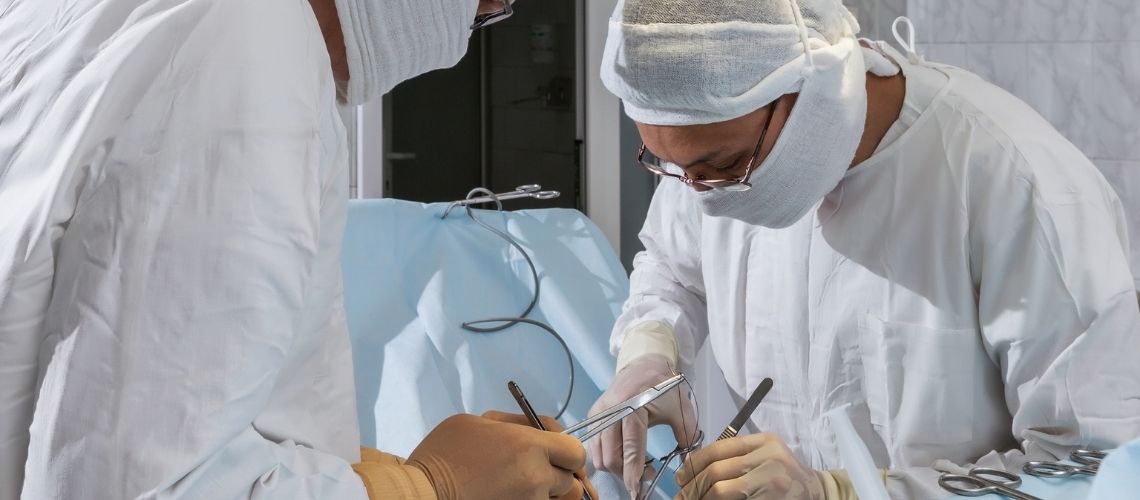


Open inguinal hernia surgery involves a single larger incision in the groin, allowing direct access to the hernia. It is often performed under local or general anesthesia and may require a slightly longer recovery period.
Closed inguinal hernia surgery, also known as laparoscopic repair, uses small incisions and a camera to guide mesh placement. This minimally invasive method reduces postoperative pain and shortens recovery time.
Open surgery may be preferred in cases of large or recurrent hernias, as it provides direct visualization and robust repair. However, it typically leaves a larger scar and involves longer healing.
Closed surgery is generally favored for quicker return to activities and less discomfort. Both approaches are safe and effective when performed by experienced surgeons, with recurrence rates depending on surgical technique and patient compliance.
İçerik
What Is Open Inguinal Hernia Surgery and How Is It Performed?
Open inguinal hernia surgery is a traditional surgical method used to repair inguinal hernias. Also known as open herniorrhaphy, this surgery is performed through a large incision that allows the surgeon to directly visualize the hernia. It is usually performed under general anesthesia, but can also be performed under local anesthesia, which may be an advantage for some patients. The surgeon locates the hernia sac and pushes it back into the abdominal cavity, then reinforces the abdominal wall to prevent recurrence. The procedure is completed in several steps.
- A large incision is made in the groin area
- The hernia sac is exposed
- Bulging tissues are pushed back into the abdomen
- The hernia sac is removed or tied off
- The abdominal wall is reinforced
- The incision is closed
One of the most commonly used techniques in open inguinal hernia surgery is the Lichtenstein method. In this technique, a synthetic mesh is placed over the hernia area. The mesh provides a tension-free repair and supports the weakened area of the abdominal wall. This aims for both faster recovery and reduced risk of recurrence. Additionally, this technique reduces muscle tension, increasing postoperative comfort for the patient. Open surgery is generally preferred for more complex or larger hernias and requires a wider incision compared to the laparoscopic method. However, it may be more affordable in terms of cost.
How Is Laparoscopic Inguinal Hernia Surgery Different from Open Surgery?
Laparoscopic inguinal hernia surgery is performed with a less invasive approach than open surgery. In this method, several small incisions are made in the abdominal area, and special surgical instruments and a camera are used. The camera, called a laparoscope, magnifies the internal images, helping the surgeon repair the hernia precisely. Carbon dioxide gas is introduced into the abdominal cavity to create a wider working space, allowing the surgeon to better visualize the hernia tissue and continue the procedure.
Some advantages of laparoscopic surgery are:
- Smaller incisions
- Less postoperative pain
- Shorter recovery time
- Lower risk of infection
- Less noticeable scars
In contrast, open surgery is performed with a single large incision, and the surgeon repairs the hernia by direct visualization. This method may be preferred for larger or more complex hernias. However, open surgery may result in a longer recovery time compared to laparoscopic surgery, and it may take patients longer to return to daily activities.
Laparoscopic surgery is technically more challenging and requires special training and experience for surgeons. In addition, this method is generally more expensive than open surgery and requires the use of special equipment. Although recovery after laparoscopic surgery is faster, it must be performed under general anesthesia, so it may not be suitable for some patients.
Which Method Provides Faster Recovery: Open or Laparoscopic Surgery?
Laparoscopic surgery, being minimally invasive, generally provides a faster recovery compared to open surgery. The main reasons for this include less trauma to the body, procedures performed through smaller incisions, and less pain. Patients undergoing laparoscopic surgery can usually return to their normal lives earlier than those who undergo open surgery.
The advantages of laparoscopic surgery include:
- Smaller incisions
- Less postoperative pain
- Less trauma
- Faster return of bowel function
- Shorter hospital stay
- Less blood loss
Thanks to these advantages, patients usually experience fewer postoperative complications and recover more quickly. The lower risk of wound infection is another important advantage of laparoscopic surgery. In addition, the need for painkillers is generally shorter, and patients can return to daily activities about a week earlier than those who undergo open surgery.
Despite the rapid recovery of closed surgery, the requirement for general anesthesia and higher cost may be disadvantages for some patients. Also, open surgery may be preferred in cases of larger or more complex hernias. The benefits of laparoscopic surgery may be especially attractive for patients seeking a quick recovery. However, determining the most appropriate method for each patient should be based on the doctor’s assessment and the patient’s health condition.
What Are the Risks and Complications of Both Surgical Methods?
Open and closed (laparoscopic) inguinal hernia surgeries differ in terms of risks and complications. Laparoscopic surgery requires special techniques and instruments such as pneumoperitoneum. This may lead to complications such as organ injury and vascular damage. In addition, if complications develop with the laparoscopic method, conversion to open surgery may be necessary. On the other hand, open surgery, by providing direct access to the surgical field, may have fewer complications during the operation, but it also has its own unique risks.
Risks during surgery:
- Organ injury
- Vascular damage
- Gas embolism
- Subcutaneous emphysema
- Excessive bleeding
In the postoperative period, the use of smaller incisions in laparoscopic surgery reduces the risk of infection and postoperative pain. Patients generally recover faster and have a shorter hospital stay. Open surgery, however, requires a larger incision, which may lead to wound complications, infections, and incisional hernia.
Postoperative complications:
- Surgical site infection
- Incisional hernia
- Delayed healing
- Deep vein thrombosis
- Pulmonary embolism
In the long term, the risk of incisional hernia is lower with laparoscopic surgery, but it is higher with open surgery. Patients who have undergone open surgery may experience complications years later that require additional intervention. Both methods should be evaluated based on the individual patient.
How Should You Choose Between Open and Laparoscopic Inguinal Hernia Surgery?
When choosing between open and laparoscopic inguinal hernia surgery, several factors should be considered. The size and location of the hernia, the patient’s health status, and previous surgeries are the main factors influencing this decision. Pain and recovery time, cost, and the surgeon’s experience with both techniques should also be considered.
Hernia Size and Location:
- Small hernias
- Large hernias
- Bilateral hernias (on both sides)
Previous Surgeries:
- Previous abdominal surgery
- Recurrent hernias
General Health and Anesthesia:
- Local anesthesia
- Regional anesthesia
- General anesthesia
Pain and Recovery Time:
- Less postoperative pain
- Faster recovery
- Incidence of chronic pain
Cost Considerations:
- Lower-cost open surgery
- Higher-cost laparoscopic surgery
- Shorter time off work
Surgeon Expertise:
- Surgeon experienced in both methods

Op. Dr. Ahmet Bekin was born in Istanbul in 1983. He graduated from the Faculty of Medicine at Kocaeli University in 2006 and completed his specialty training in the Department of General Surgery at Istanbul University Çapa Faculty of Medicine in 2011. After his specialization, he worked in the fields of hernia surgery, reflux surgery, obesity surgery, advanced laparoscopic surgery, and robotic surgery. In addition, he received training in endocrine surgery, oncological surgery, and minimally invasive surgery. He is currently accepting patients from Turkey as well as from countries such as Germany and France at his private clinic located in Istanbul.